Radiometric dating and stratigraphic correlation of Member I (see Stratigraphy and Chronology 3.2) from which Omo I and Omo II derive suggest that these specimens date to 195 + Kyr, making them the oldest-known examples of our species, Homo sapiens. Original fieldwork yielded very little information in association with the three hominin specimens in the form of either fauna or other archaeological residues that might have been helpful in placing the specimens in a broader context. Fieldwork from 2001 to 2003 contributed additional hominin remains, faunal remains, and lithics to understanding the behaviors and environments of the Omo humans.


Fossils

  • Omo I – Modern-looking fragmentary cranium, dentition, and mandible with numerous associated postcranial remains.
  • Omo II – Nearly complete, isolated neurocranium of a somewhat more archaic appearance.
  • Omo III – Fragments of the anterior part of the cranium and upper face. Omo IV – Tibia, fibula


Figure 4.1 – Fossil crania of Omo I (Member I) and Omo II (Member I)(photo by Michael Day).

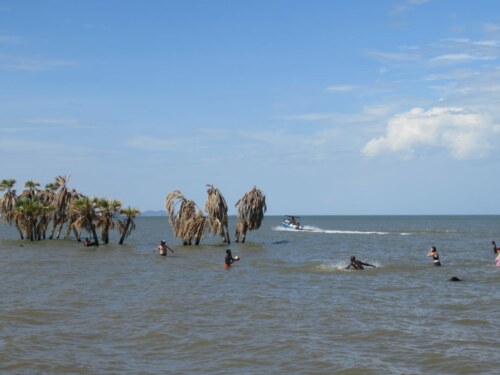
The mammalian fossils all belong to species of extant taxa, many of which still reside in the region today but some of which live in wetter environments. The fish fauna contains the same species of fish found in the Omo River today, such as the giant catfish, and the birds are water birds such a pelicans. Geological research and the large vertebrate record suggest that overall conditions were similar to as they are today, but with additional elements suggesting wetter conditions and/or a mosaic environment.


3.3 Lithics

Beyond noting that several dozen ‘Levallois’ flakes and cores had been uncovered in association with Omo I during the 1967 expedition, little else was written about the technological repertoire of the Omo humans. The paucity of archaeological materials and faunal remains from the original fieldwork made it difficult to put the Kibish hominins in a broader archaeological and paleontological context.

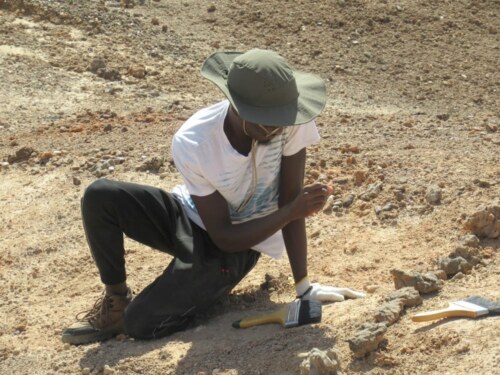
Renewed archaeological research in the Omo Kibish Formation between 2001 and 2003 focused on three main archaeological sites: KHS, AHS (Member I) and BNS (Member II). The lithic assemblages from the sites are dominated by relatively high-quality raw materials derived from pebbles in local gravel deposits. Core preparation is dominated by the radial/centripetal Levallois and discoidal methods. Foliate bifaces and larger tools have been recovered, but these derive mainly from surface finds rather than excavated assemblages. Overall, the extensive lithic record indicates a Middle Stone Age technological repertoire similar to other assemblages in Ethiopia and East Africa between 250 ka and 50 ka.


3.3a Assemblages

KHS Location

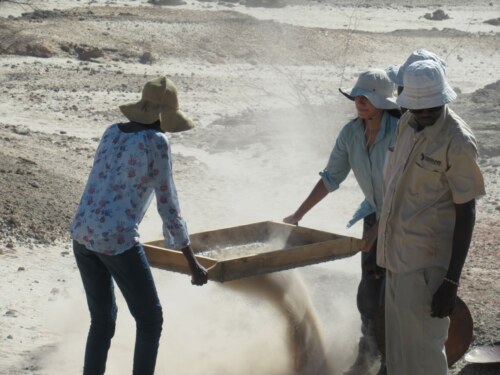
Systematic excavation and surface collection of KHS began in 2002. All sediments were excavated with trowels and screened through mesh cloth. The principal archaeological layer at KHS is Level 3, with most artifacts recovered in situ from Level 3 or at the contact of Level 3 and Level 2 (dated to 195+ 5ka). A dense concentration of stone tools and some vertebrate fossils were recovered below these levels, but judging by the loose sandy substrate, these seem to have eroded into their present position in recent time. Raw materials in the KHS assemblage are predominantly fine-grained cryptocrystalline silicates such as jasper, chalcedony, and chert. The presence of small quantities of coarser-grained, less-siliceous opal silica in the KHS assemblage is notable, since it is was not encountered in other Kibish MSA assemblages.

Technologically, the KHS assemblage is predominantly composed of debris and flakes and flake fragments with fresh surfaces and edges, suggesting that KHS was affected minimally by fluvial disturbance between the deposition of Level 3 and its burial under 2. Of the 24 cores in the assemblage, most are made from high-quality jasper, chalcedony and chert. Half are Levallois cores, most of which are radially/centripetally prepared and less than 3 cm long. The 294 debitage products in the assemblage are similarly composed mostly of jasper, chalcedony and chert. Half of these are debris, suggesting that the primary reduction of raw materials was important to the formation of the KHS assemblage. Coarse-grained raw materials such as rhyolites and basalts are somewhat more common among the 20 retouched tools in the assemblage, but the small sample size precludes what we can infer from this observation. Most of these tools are sidescrapers and backed knives but also include an ovate handaxe recovered on the surface downslope of Level 2-3. In comparison to the whole flakes of the KHS assemblage, the retouched tools do not seem to be substantially modified or curated. There are two basalt hammerstones in the KHS assemblage. For a complete summary of the KHS assemblage, see KHS Assemblage Summary in the Appendix.

AHS Location

Excavation at AHS was more exploratory than KHS and BNS due to time constraints on the expedition and its considerable distance from base camp. Awoke Amzaye discovered AHS in 2003 and recovered a hominin tibial fragment from the site surface. Subsequent systematic surface collection by A. Amzaye, J. Fleagle, and J. Shea focused on 5 collection squares totaling an area of about 117m2. Excavations were conducted with hand tools and sediments were screened through a wire-mesh. Two excavation trenches linked to reveal 17m2 to a depth of at least 2.0 m below datum. Of the ten major levels recognized, Levels 4 and 6 appear to be the main anthropological levels on the basis of lithics, vertebrate fossils, and faunal remains. Among the finds were a conjoining tibial fragment and fibular fragment excavated from Level 6.

The lithic assemblages of AHS have been divided into three separate assemblages: Levels 1-5, Levels 6-8, and AHS surface. Such a division undoubtedly conflates different levels, but it reflects the difficulties in discerning stratigraphic levels during the excavation. All of the assemblages are dominated by vast quantities of debris which have not been tabulated in the assemblage summary (see Appendix) due to time constraints.

The AHS assemblages are marked by a diversity of raw materials, the most common of which is chert (43%) followed by rhyolite and shale. Fine-grained silicates (jasper, chalcedony, chert) are somewhat more common in the AHS Surface and Levels 6-8 sub-assemblages than in AHS 1-5. Like KHS, AHS yielded pieces of opal silica but these do not appear to have been knapped. Another notable less common material is a pink shale which seemed to have been the focus of considerable reduction, despite its low-silica content.

BNS Location

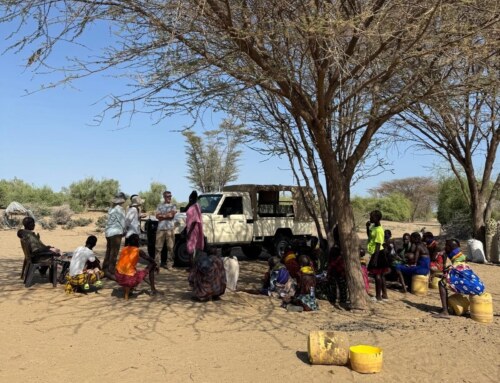
BNS was discovered by Z. Assefa in 2002. The site is a promontory comprised of two small hills, BNS East and BNS Main. Excavation of BNS began in 2002 with a 5m trench running west-east, which was later extended southward underneath BNS Main following a thin artifact-bearing level, Level 3. Rows adjacent to the trench were gridded and systematically surface collected. Sediments were screened using a 50mm mesh. During the course of excavations in 2003, numerous stone tools, bone fragments, and reddish patches were found south of BNS Main. Excavations at the site halted prematurely due to an aborted cattle raid and ensuing gunfire in the area.

In terms of stratigraphy, BNS includes the transition from Kibish Members II and III. The principle archaeological level of BNS, Level 3, is a 10cm layer of sand and silt directly above the undated Member II tuff. Member III, which is located above BNS Level 3 but is not present in the immediate vicinity, provides a minimum age for BNS of 104+1 ka.

Figure 3.3 - Scatterplot of mean values for flake surface area/flake thickness ratio (FSA/T) and the striking platform width/striking platform thickness ratio (PW/PT) for flakes from Lower, Middle and Upper Paleolithic assemblages (modified from Dibble (1997: 170, Fig. 21)).

The Kibish Industry and most of the East African MSA assemblages described above share the following key features:

  1. Large core-tools (handaxes, picks, core-axes, and lanceolates) are present but relatively rare. Such symmetrical bifaces as are found tend to be relatively small, and triangular, ovate, or cordiform in shape.
  2. Levallois debitage is present in all assemblages. Radial/centripetal Levallois core-preparation seems to have been a common technique, but most estimates are based on counts of cores rather than analysis scar patterns on the dorsal surfaces of flakes.
  3. Discoidal core reduction is also present in most assemblages.
  4. Foliate bifacial points are present in many assemblages, although their frequency varies.
  5. There is little evidence for the systematic production of geometric backed pieces. Such backed pieces are known from sites not much further south than those discussed here, including Mumba Cave in Tanzania (Mehlman, 1989) and Enkape Ya Muto in the southern Kenya (Ambrose, 2002).

The MSA assemblages from Omo Kibish Members I-III appear to be a local variant of a larger, as-yet-unnamed, East African MSA industrial complex (Brandt, 1986; Clark, 1988). There appear to be strong typological similarities among East African MSA assemblages spanning the period from ca. 140-230 Kya (at Omo Kibish Member I and Gademotta/Kulkuletti) to at least ca. 80-100 Kya at (Omo Kibish Member III, Aduma Ardu B, and Porc Epic). Such similarities could suggest a significant degree of cultural continuity, and perhaps demographic stability in this region. Though one is rightly skeptical about equating similarities among stone tool industries with biological continuities among their makers (Clark and Riel-Salvatore, 2005), there are reasons apart from those involving assumptions about the sources of lithic industrial variation that suggest there may have been such continuity.

High topographic relief insulates East Africa (or rather, micro-regions within East Africa) from wide climate change to a somewhat greater degree than North or South Africa (Hamilton, 1982; Littmann, 1989). During arid phases of the Middle-Late Pleistocene climate, such topographic variation may have created hospitable refugia for human populations within East Africa (Brandt, 2006). The Red Sea Coast of Eritrea, for example, featured freshwater “oases” at times of lowered sea level and inland desertification (Faure, et al., 2002; Bruggemann, et al., 2004). The woodlands lining the Omo River may have been a similar such refugium during arid periods, though probably more episodically than for prolonged periods. Techno-typological continuities among East African MSA assemblages may reflect the isolation, persistence, and periodic dispersals of early Homo sapiens populations within this region. This hypothesis clearly needs further substantiation from paleoclimatic studies within East Africa and from more-detailed analysis of East African MSA assemblages, as well as concerted efforts to date more of them. If this hypothesis is supported by research, increased understanding of the sources of behavioral variability reflected in the East African MSA will shed considerable light on the origin and initial adaptive radiation of Homo sapiens.